
Most safari-goers spend their trip looking at animals through a vehicle window. At Lake Eyasi, you spend a morning walking alongside some of the last hunter-gatherer communities left on Earth.
Who are the Hadzabe?
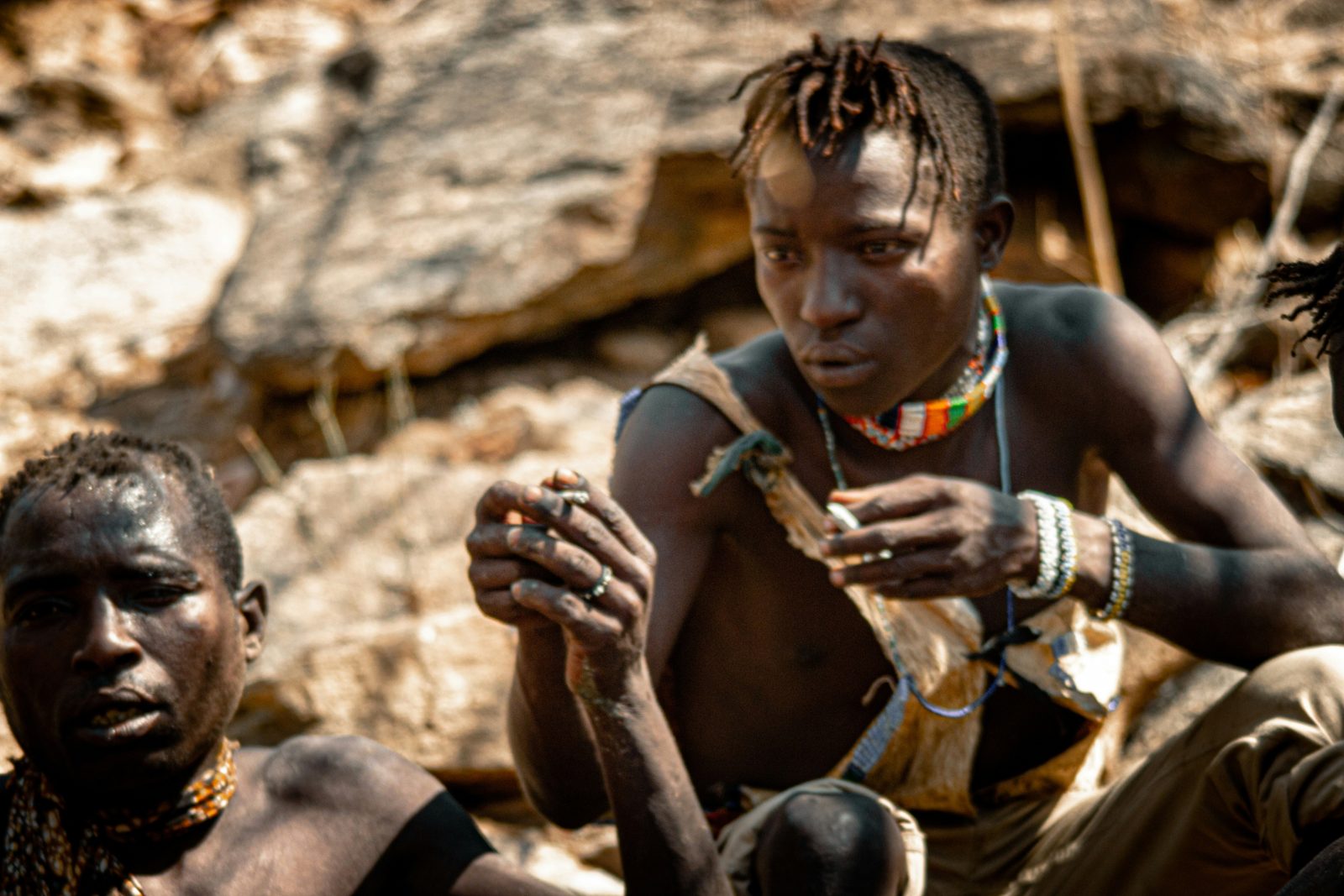
The Hadzabe (also spelled Hadza) are believed to be one of the oldest surviving lineages of humankind, living around Lake Eyasi for tens of thousands of years. Their language, built on distinctive click consonants, is unrelated to neighboring Bantu languages. Unlike many "cultural visit" experiences that are staged for tourists, a Hadzabe morning is built around what they'd actually be doing that day: tracking game, foraging, and hunting with hand-made bows and arrows.
What to expect
Guests join a small hunting party at dawn, learn how arrows are made and fletched, and often get the chance to try shooting themselves. It's physical, informal, and unscripted - some mornings yield a kill, most don't, and that unpredictability is part of what makes it feel real rather than performed.
The Datoga, too
Lake Eyasi is also home to the Datoga, a pastoralist and blacksmithing community distinct from both the Hadzabe and the more widely known Maasai. Many itineraries pair a Hadzabe morning with a Datoga village visit, showing two very different ways of life within a few kilometers of each other.
Why this belongs in your itinerary
If the rest of your trip is Big Five game drives, a Lake Eyasi morning is the counterweight - it's the one day where the "wildlife" you're watching is entirely human, and it tends to be the day guests talk about most once they're home.